Leave Your Message

How to Choose an Electric Fireplace TV Console

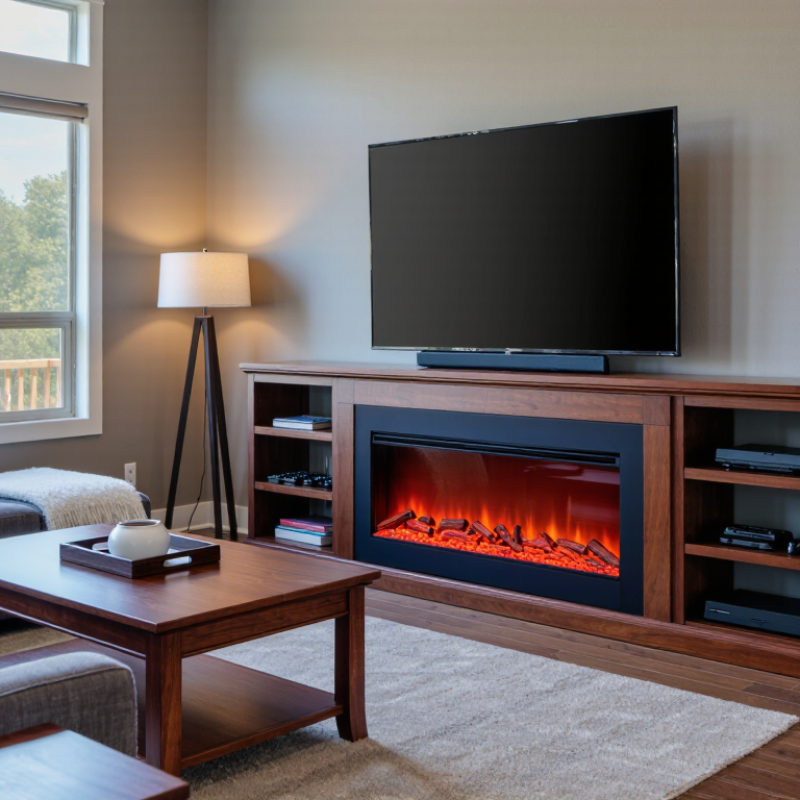
Choosing an Electric Fireplace Tv Console is not only a style decision. It affects viewing comfort, storage, heat placement, and daily safety. A polished finish may attract attention, yet poor ventilation can make the console impractical. Room measurements matter more than showroom impressions.

Home renovation expert Scott McGillivray often emphasizes, “A beautiful feature wall still needs to work for the room.” That principle fits fireplace consoles perfectly. Measure the wall, sofa distance, television width, and available outlets before comparing designs. Leave clear space around the fireplace and follow the manufacturer’s installation instructions. Never assume every model suits every television.

Think about real use. Will the shelves hold game systems, remotes, or heavy media equipment? Can the doors open without striking a coffee table? Does the flame display remain visible from your usual seat? These small details shape satisfaction after delivery. They are easy to overlook.

Heat output deserves careful attention. Some rooms need gentle supplemental warmth, while others need only the flame effect. Check thermostat controls, noise levels, child-lock features, and automatic shutoff functions. A realistic flame can create atmosphere without becoming the room’s main heat source.

Finish and proportion still matter. White consoles brighten compact rooms, while walnut tones add visual weight. A console that looks balanced in a photograph may feel oversized beside a low sofa. That assumption can fail.

This guide explores how to compare dimensions, heating performance, storage, materials, controls, and safety features. It also considers budget and long-term maintenance. The best Electric Fireplace Tv Console is not simply the most attractive option. It is the one that quietly fits your room, habits, and expectations.
How to Choose an Electric Fireplace TV Console

Measure TV and Wall Space Against VESA and Viewing-Distance Data

How to Choose an Electric Fireplace TV Console

Measure the wall before choosing the console. Record its full width, outlet locations, baseboard depth, and nearby furniture. Your television should not dominate the wall or overhang the console dangerously. Leave visible clearance around the fireplace opening, and follow the appliance manual for heat separation requirements. General spacing advice can be misleading.

Measure twice.

VESA compatibility matters more than screen size. Measure the horizontal and vertical distance between the television’s mounting holes. The VESA Flat Display Mounting Interface standard specifies these patterns in millimeters, such as 200 × 200 or 400 × 400. Check the console bracket’s pattern, weight rating, screw length, and vertical adjustment range. A correct pattern does not guarantee safe installation. The television’s actual mass must remain below the bracket limit.

Viewing distance also changes the best console height. SMPTE Engineering Guideline EG 18-1994 uses a 30-degree horizontal viewing angle as a reference for comfortable cinema viewing. For a 65-inch 16:9 screen, that points to roughly 8.8 feet from the viewer’s eyes to the screen center. Calculate your distance from the sofa, not the wall. The screen center should sit near seated eye level, while the fireplace remains visually balanced below it. I have seen attractive setups feel awkward because the screen was mounted too high. The calculation helps, but real posture, glare, and room lighting still need judgment. Fresh measurements may expose an imperfect plan.

Match Heat Output: 4,600 BTU/h Typically Covers Up to 400 sq ft

How to Choose an Electric Fireplace TV Console

A 4,600 BTU/h electric fireplace produces about 1.35 kW of heat. That output typically covers up to 400 square feet as supplemental warmth. The estimate equals roughly 11.5 BTU per square foot. However, room size alone can mislead. The U.S. Department of Energy’s Energy Saver guidance identifies insulation, window area, air leakage, and local climate as major heating factors. A drafty corner room may feel cold, even with the same rated output.

Think about the room’s real conditions. A 400-square-foot open living room with insulated walls may respond well. A smaller room with high ceilings and older windows may need more support. The Air Conditioning Contractors of America uses Manual J load calculations to assess these details professionally. Its method considers design temperature, building materials, orientation, and infiltration. Use the 4,600 BTU/h figure as a practical starting point, not a guarantee.

Electric resistance heating converts nearly all incoming electricity into heat at the point of use, according to the U.S. Department of Energy. Still, comfort depends on placement. Keep the console away from blocked vents and leave airflow around the heater. Measure the room twice. Check the heat setting, thermostat behavior, and circuit requirements before installation. Small assumptions matter. Personally, I would choose the lower output only after checking drafts, because “up to 400 square feet” can sound more precise than it really is.

Verify Electrical Load: 1,500 W Draws 12.5 A on a 120 V Circuit

How to Choose an Electric Fireplace TV Console

Verify Electrical Load: 1,500 W Draws 12.5 A on a 120 V Circuit

Check the heater’s rating plate before choosing a console. A 1,500-watt heater on 120 volts draws 12.5 amps. The calculation is simple: watts divided by volts. That demand can consume nearly all the practical capacity of a 15-amp circuit. If the heater runs continuously, it may exceed the commonly used 80% continuous-load guideline.

Do not share that circuit casually.

A television, game system, lamps, or sound equipment can add meaningful demand. A 20-amp circuit usually offers more operating room, but the breaker rating alone does not confirm suitability. Wiring condition, circuit length, outlet quality, and other connected devices also matter. Check the console’s manual and the receptacle circuit carefully. Never use a power strip or extension cord unless the manufacturer specifically permits it and its rating is adequate.

A useful field check is to turn off the suspected breaker and identify every dead outlet. This step often reveals hidden loads. I have found that a “dedicated” outlet may still serve nearby lighting or another room. That assumption needs testing. For uncertain wiring, ask a qualified electrician to verify the circuit before installation. Leave airflow around the heater, keep cords away from hot surfaces, and stop using the unit if an outlet feels warm, smells unusual, or shows discoloration.

Verify Electrical Load Before Choosing an Electric Fireplace TV Console

A 1,500-watt fireplace operating on a 120-volt circuit draws approximately 12.5 amps, calculated with the formula Current = Power ÷ Voltage. Compare the calculated load with the circuit's rated capacity and follow local electrical requirements.

Check Safety Certification and Clearances Under UL 1278 Guidelines

When choosing an electric fireplace TV console, verify its safety certification before judging style or storage. UL 1278 covers key safety requirements for movable and wall-mounted electric heaters. Look for a clear certification mark, model number, electrical ratings, and traceable listing information. A printed symbol alone is not enough. Check the model in the certification directory or request documentation from the seller.

Clearance is equally important. Follow the installation manual for spacing above the heater, behind the console, and around nearby curtains or wood panels. Do not place cables across the heating outlet. Keep ventilation openings uncovered.

The TV should sit only where the manufacturer permits, because heat can damage panels, electronics, and wiring. There is no universal clearance number for every console. That detail is easy to miss.

NFPA’s Home Heating Fires report recorded about 44,210 home heating fires annually from 2016 to 2020. These incidents caused roughly 480 deaths and 1,370 injuries each year. Electric fireplaces are not automatically risk-free.

During a practical inspection, I would use a thermometer near the TV after 30 minutes of operation. It is not a certified test, but it can reveal worrying heat buildup. I would also stop using any unit with a loose plug, damaged cord, unusual odor, or repeated shutdowns. Small oversights matter.

Estimate Operating Cost Using 3,412 BTU per kWh and Local Rates

How to Choose an Electric Fireplace TV Console

Start with the math. A practical estimate uses 3,412 BTU per kilowatt-hour. Divide the fireplace’s heat output by 3,412 to find its hourly electricity use. For example, a 5,000 BTU heater uses about 1.47 kWh per hour. At a local rate of $0.18 per kWh, operation costs approximately $0.26 per hour.

3,412 BTU per kilowatt-hour 5,000 BTU heater ≈ 1.47 kWh per hour
$0.18 per kWh ≈ $0.26 per hour

Check the unit’s wattage label, not only its advertised flame appearance. A 1,500-watt heater equals about 5,118 BTU per hour and costs $0.27 hourly at that same rate. Running it for four hours daily would cost roughly $32 per month. Your bill may differ because thermostats cycle the heater on and off. Insulation, room size, window drafts, and outdoor temperature matter.

When comparing a console, record the heater’s wattage and your utility’s current price per kWh.

watts ÷ 1,000 × hourly rate

Then multiply by actual heating hours. I recommend testing the console beside a cold window for one evening. The result may expose heat loss that a showroom cannot show. One estimate is rarely perfect.

A lower setting may feel comfortable while using less power, especially in a compact room. Also check ventilation space, stable construction, and television clearance before placing the console against a wall.