Top Types of Wood for Nightstands
Choosing the best Night Stand Wood starts with more than color, grain, or a showroom photograph. A nightstand faces daily contact, shifting humidity, warm lamps, spilled water, and repeated drawer movement. The USDA Forest Products Laboratory’s Wood Handbook, FPL-GTR-282, explains that wood continually exchanges moisture with surrounding air. That movement can affect fit, finish, and long-term stability.
Bruce Hoadley, a respected wood technologist and author of Understanding Wood, offered a memorable warning: “Wood moves.” Simple, but easy to forget. It should guide every species comparison in this article. Oak offers strong pores and dependable hardness. Maple provides a cleaner, tighter surface. Walnut brings darker color and a refined feel. Pine costs less, yet its softer surface shows dents quickly. Bamboo is not technically a solid wood, but engineered bamboo can provide useful stability when manufactured carefully.
The FAO Global Forest Resources Assessment 2020 reports that forests cover about 31 percent of global land area. That figure gives sustainability a necessary place in furniture decisions, although it does not make every wood product responsible automatically. Certification, harvest origin, adhesive quality, and finishing chemicals still matter. Look closely.
My own preference changes by room. A dry bedroom may suit solid oak, while a humid home may benefit from carefully engineered panels. No species wins every space. Even experienced makers misjudge moisture movement sometimes. That uncertainty deserves honest attention. The sections ahead compare durability, appearance, maintenance, cost, and sourcing, helping readers choose Night Stand Wood with practical confidence rather than attractive assumptions.
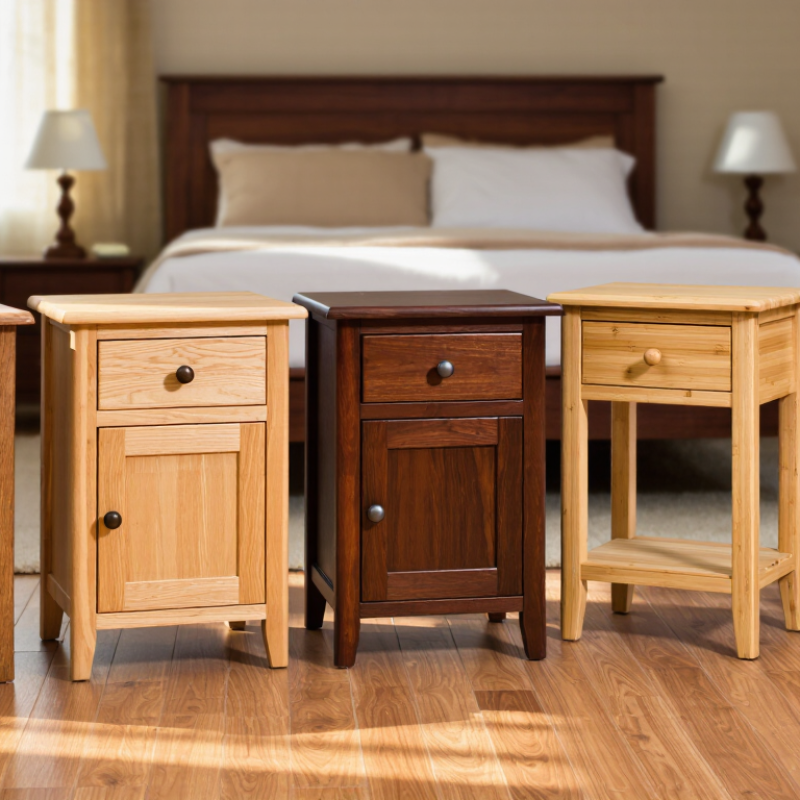
Janka Hardness Data: Oak (1,290 lbf), Maple (1,450), Walnut (1,010)
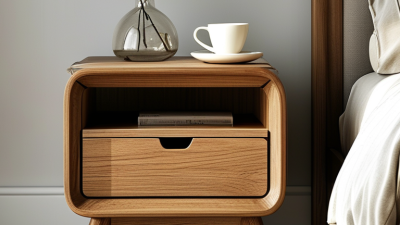
Choosing wood for a nightstand requires more than matching a room’s color. Janka hardness data offers a practical starting point. Oak measures about 1,290 lbf, making it a dependable choice for everyday furniture. Its open grain can hide small dents and surface marks. That helps beside a bed, where books, glasses, and chargers often move around.
Maple ranks higher at approximately 1,450 lbf. It resists indentation well, especially under lamps or heavier objects. Its fine, even grain creates a cleaner appearance. However, harder wood is not automatically better. Maple can show scratches clearly because its pale surface offers strong contrast. That distinction matters. A durable finish still protects the surface.
Walnut measures roughly 1,010 lbf, so it is softer than oak and maple. I have found that its rich color makes minor wear less noticeable. It also feels warm and substantial in a darker bedroom. Still, careless handling can leave visible marks near the drawer pulls. Not always. Janka values describe resistance to denting, not overall quality. Construction, moisture control, joinery, and finish affect real performance. My earlier assumption was simple: harder meant longer-lasting. Experience made that view less certain. A well-built walnut nightstand may serve better than poorly assembled maple furniture. Choose based on daily use, desired appearance, and tolerance for natural wear.
Moisture and Stability: USDA Wood Handbook Data for Nightstand Joinery
Top Types of Wood for Nightstands
Wood choice affects more than appearance. Moisture movement can loosen drawer joints, tilt a tabletop, or open small gaps at seasonal seams. The USDA Forest Products Laboratory’s Wood Handbook (2010) reports total shrinkage from green to oven-dry of 7.1% tangentially and 3.7% radially for cherry. White oak measures 10.5% and 5.6%, respectively. These are full-drying values, not expected changes inside a bedroom, but they show why boards move differently across and along the grain.
The same handbook gives an equilibrium moisture content of about 9.2% at 70°F and 50% relative humidity. That figure is a useful reference, not a guarantee for every home. For nightstand joinery, let stock acclimate near the room’s conditions and check its moisture content before assembly. Use floating panels or slotted fasteners where solid tops need room to move. A tight, rigid joint may look reassuring; it can also concentrate stress. I would not assume a finished surface stops moisture exchange.
Tips: Keep grain direction in mind. Match drawer fronts and sides for movement, and avoid trapping a solid-wood panel tightly in its frame. Measure twice. If indoor humidity swings widely, plywood may provide more stable panels, though solid-wood edges still need thoughtful joinery.
Top Types of Wood for Nightstands — Moisture and Stability: USDA Wood Handbook Data for Nightstand Joinery
How to read the data: Shrinkage values describe dimensional change from green wood to oven-dry wood; they are not expected in full in a finished nightstand. The T/R ratio is tangential shrinkage divided by radial shrinkage. A higher ratio indicates more difference between those directions, not necessarily greater total movement.
Moisture and construction: Wood continues to gain or lose moisture as indoor conditions change. Use lumber dried for its intended indoor environment, acclimate it before assembly, and allow solid-wood panels to move across the grain. A finish can slow moisture exchange but does not prevent wood movement.
Data basis: Shrinkage and specific-gravity figures are rounded values reported in the USDA Forest Products Laboratory’s Wood Handbook: Wood as an Engineering Material. Actual properties vary with individual boards and growing conditions.
Strength and Load Capacity: Applying ASTM D198 Structural-Test Principles
Top Types of Wood for Nightstands
A nightstand must carry lamps, books, and occasional body weight without excessive deflection. ASTM D198 offers a useful framework for evaluating this risk. The standard examines structural-sized wood members through bending, tension, compression, and shear tests. A nightstand is smaller, but the same forces appear around its top, legs, rails, and joints.
Hard maple, white oak, and beech provide strong options for load capacity. The USDA Forest Products Laboratory’s Wood Handbook, FPL-GTR-282 (2021), reports clear, dry hard maple at approximately 15,800 psi in bending strength and 1.83 million psi in stiffness. White oak measures about 14,300 psi and 1.78 million psi, respectively. These values are useful references, not guarantees. Moisture, knots, grain direction, and poor joinery can reduce real performance. My practical concern is often the joint, not the board. A thick top can still fail when screws loosen or legs rack sideways.
Tips: Test the assembled nightstand, not only loose wood samples. Place 1.5 times the expected load on the top for a controlled check, then inspect sag, cracking, and joint movement. Keep heavy objects near the legs. Use straight-grained stock for rails. Record moisture conditions, because wood strength changes with humidity. ASTM D198 results cannot directly certify household furniture, and that limitation deserves attention. Even experienced builders sometimes overestimate wood strength while underestimating connection weakness.
Indoor Safety: EPA TSCA Title VI Limits for Composite-Wood Panels
For a nightstand, solid maple, oak, and walnut offer sturdy surfaces and visible grain. Composite panels can also make a stable, affordable piece, but the adhesives matter indoors. A drawer that smells strongly when opened deserves attention; odor alone, however, cannot measure emissions. Labels matter.
EPA’s TSCA Title VI rule sets formaldehyde emission limits for composite-wood panels: 0.05 parts per million for hardwood plywood, 0.11 for medium-density fiberboard, 0.13 for thin MDF, and 0.09 for particleboard. These figures come from EPA’s technical rule materials and refer to emissions measured under specified chamber-test methods, not the formaldehyde content of the panel. The rule also covers finished goods made with regulated panels, including many nightstands.
When shopping, look for a TSCA Title VI compliance label or ask the seller for documentation. Certified panels are tested through accredited third-party processes. A solid-wood frame does not automatically mean every drawer bottom or back panel is solid wood, so inspect those less-visible parts. This is easy to overlook. Ventilating a new piece can help disperse indoor pollutants, but it does not replace compliant materials. I would not rely on smell—or a vague “low-emission” claim—as proof. The paperwork can feel tedious, and labels are not always easy to find; still, checking them is a more dependable step.
Sustainable Sourcing: FSC Chain-of-Custody Standards for Nightstand Timber
A nightstand may use oak, maple, walnut, or another timber, but the species alone says little about where the wood came from. FSC chain-of-custody certification tracks forest-based material through processing and trade. Each business handling a certified claim must meet the relevant requirements, so the trail can reach the finished piece.
That matters.
Look for a clear FSC claim on the product or its documentation, not just a forest-friendly phrase on a shelf tag. FSC 100% indicates material from FSC-certified forests; FSC Mix can include certified, recycled, or controlled sources under the standard’s rules. These categories are not interchangeable. If details are available, compare the certificate code and its scope with the supplier’s claim. A certificate is useful, but it does not prove every aspect of a nightstand’s quality or environmental impact.
For timber, ask whether the certification applies to the wood in the actual nightstand, rather than to a different product or component. Check invoices or product records when possible, especially for custom furniture. The paperwork can feel less reassuring than seeing the grain and joints in person. Still, traceability gives buyers something concrete to verify. It is not perfect, and labels can be confusing; asking one specific question about the timber is a reasonable start.