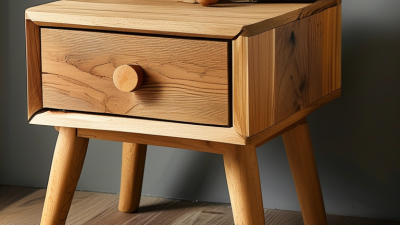
A White Nightstand can brighten a bedroom, balance darker furniture, and keep bedtime essentials close. But white is not one simple finish. A smooth painted surface, warm ivory tone, or visible wood grain can change how the piece looks beside your bed. Choosing well means considering both appearance and daily use.
Start with the space you have. Measure the gap beside the bed, then compare the nightstand’s height with the mattress. A surface that sits near mattress level is often convenient for reaching a book, phone, or glass of water. Check drawer depth and door clearance, too, especially in a narrow room. Small details matter. A drawer that sticks or a handle that catches on nearby bedding can become irritating surprisingly fast.
Think about what you actually keep nearby. One drawer may be enough for reading glasses and chargers, while an open shelf suits books or a basket. Consider the finish, materials, assembly needs, and how easily fingerprints or dust show. Reviews can reveal practical concerns, though they cannot guarantee that a piece will fit your room or meet your expectations. That part takes careful measuring. These ten buying tips will help you compare size, storage, style, durability, and value before deciding. Not every detail will be obvious in a product photo, and even a careful choice may feel different once it is beside your bed. That is worth keeping in mind.
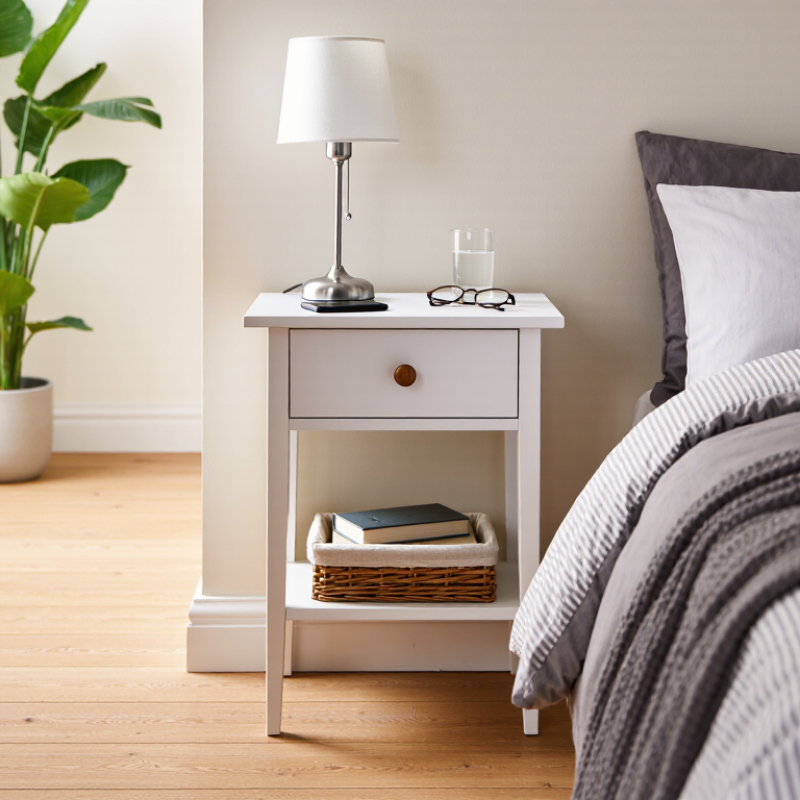
Before choosing a white nightstand, note what your bedroom actually needs it to do. Measure the space beside the bed, including the walking path and room for drawers to open. A narrow gap may suit a compact table; a wider area can hold books, glasses, and charging cables. White can brighten a dim corner, but a bulky cabinet still feels bulky.
Check the height, too. A nightstand near mattress level is usually easier to reach, though a thick mattress can throw off your first estimate. Decide whether you need open shelving, closed drawers, or both. If you plan to use a lamp, measure its base and shade. A crowded surface gets irritating fast.
Tip: For a few evenings, notice what you actually set beside the bed: a water glass, a book, your phone, or something else. Check where the nearest outlet sits, and whether cords can reach without crossing a walkway. It is easy to overestimate how much storage you need. I might still get that wrong, so leave a little room for changing habits.
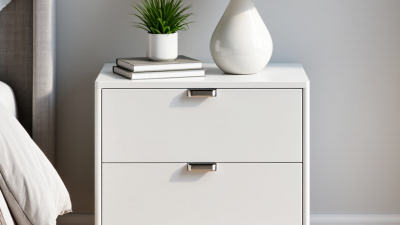
A white nightstand can make a bedroom feel brighter, but an oversized one can crowd the bed. Measure the available wall width, including baseboards, nearby drawers, and curtain overlap. Then check the walking path with the bedroom door open. A tape measure on the floor helps reveal awkward pinch points before you buy.
Match the nightstand’s height to the mattress top, or keep it within a couple of inches. This makes a phone or glass of water easy to reach. The International Sleep Products Association lists a U.S. queen mattress as 60 by 80 inches; measure your own bed, since frames can add width. For a narrow room, a slim table may work better than a wide cabinet. Leave enough clearance to open drawers fully. A small gap matters.
Budget mistakes can add up. Houzz’s 2024 U.S. Houzz & Home Study reported a $24,000 median renovation spend for 2023, a reminder that careful planning protects larger home budgets. That figure is not nightstand-specific, of course. Still, recheck the measurements after accounting for outlet locations and lamp bases. I would not trust a quick visual guess; white furniture can look smaller against a pale wall than it really is.
10 White Nightstand Buying Tips for Your Bedroom
A white nightstand can brighten a bedroom, but its storage should match your routine. Check what you actually keep nearby: a book, glasses, charging cable, or medication. A single drawer hides small items, while an open shelf keeps reading material within reach. Deep drawers fit bulkier belongings, but can make a compact bedside area feel crowded. Measure the space beside your bed before choosing.
Compare more than the number of drawers. Look for smooth drawer movement, sturdy handles, and a stable base that will not wobble when you reach for a lamp. If you charge devices overnight, check whether the back panel leaves room for cords. A raised edge can help keep a phone from sliding off. White finishes vary, too; fingerprints and dust may show more clearly on glossy surfaces. I used to focus on appearance first. That was not always practical.
Tips: Measure the nightstand’s height against your mattress. Test whether drawers open fully beside the bed. Choose an open shelf for items you use often, and closed storage for visual clutter. Check the finish in your room’s lighting; some whites look warmer or cooler than expected. A slightly imperfect fit can still work, but it is worth noticing before purchase.
| # | Buying Tip | Options to Compare | Practical Check | May Suit |
|---|---|---|---|---|
| 1 | Match the height to your bed | Measure from the floor to the top of the mattress; compare that measurement with the nightstand top. | A surface close to mattress height is generally convenient for reaching a lamp, phone, or glass of water. Check the finished height, including feet. | Anyone who wants bedside essentials within easy reach. |
| 2 | Check width and floor space | Compare compact, narrow designs with wider tables that provide more surface area. | Measure the available space beside the bed and allow room for drawers or doors to open without hitting the bed, wall, or nearby furniture. | Small bedrooms, tight walkways, or beds with limited side clearance. |
| 3 | Choose storage for what you keep nearby | Open shelf, one drawer, multiple drawers, or a combination of drawers and shelving. | Use drawer interiors and shelf dimensions—not just the outside dimensions—to check whether books, chargers, or other items will fit. | Open shelves suit frequently used items; drawers help keep smaller belongings out of sight. |
| 4 | Inspect drawer operation | Compare standard drawer slides with smoother, soft-close mechanisms where available. | Look for drawers that open and close evenly, usable handle placement, and a stop or design that helps prevent accidental removal. | People who use bedside storage often or want quieter closing. |
| 5 | Compare materials and construction | Solid wood, plywood, and particleboard or MDF with a painted or laminated finish. | Materials differ in weight, cost, repairability, and moisture resistance. Check the product details for the actual material used in the top, frame, and drawer bottoms. | Buyers balancing durability, weight, appearance, and budget. |
| 6 | Look closely at the white finish | Painted, laminated, or coated surfaces can have different sheen levels, such as matte, satin, or gloss. | White shades and sheen can look different under warm and cool lighting. Review care instructions and, when possible, compare a finish sample in the bedroom. | Anyone coordinating the table with white bedding, trim, or other furniture. |
| 7 | Check the top surface | Compare a compact top for essentials with a larger top for a lamp, clock, and other items. | Confirm the usable top dimensions and any stated weight limit. Use a coaster for drinks and follow the manufacturer’s care guidance to help prevent stains or damage. | Those who need space for a bedside lamp, reading material, or daily essentials. |
| 8 | Assess cable and charging access | Plain furniture with a nearby wall outlet, or a model with a built-in charging port or power outlet. | For built-in electrical features, check the outlet location, cord length, applicable safety information, and whether the unit must be assembled or plugged in a particular way. | People who charge a phone or other small device beside the bed. |
| 9 | Consider stability and safety | Compare a broad, stable base with lighter designs; check whether wall-anchoring hardware is supplied. | Place the nightstand on a level floor and follow assembly and anchoring instructions. Secure tall or top-heavy furniture as directed, especially in homes with children. | Households seeking a steadier table or adding furniture to a child-accessible room. |
| 10 | Review assembly and care requirements | Fully assembled or ready-to-assemble designs; compare the number of parts and tools required. | Check package dimensions, delivery access, assembly instructions, and the recommended cleaning method. Mild, non-abrasive cleaning is commonly suitable for many finished surfaces, but follow the product guidance. | Buyers planning delivery, self-assembly, or routine cleaning. |
White nightstands can look crisp in a showroom but warmer or cooler at home. Check the finish beside your bedding and wall color, preferably in daylight and under a lamp. Glossy white reflects more light and wipes clean easily, though fingerprints and small scratches may stand out. Matte finishes soften glare, but some textured surfaces hold dust in their grain. A sample can help; still, a small chip may not show how the whole piece looks.
Tip: Ask whether the white finish is paint, laminate, or sealed veneer. Painted surfaces can be touched up, but repairs may remain visible. Laminate resists everyday spills, yet a damaged edge can be difficult to disguise. Check corners, drawer fronts, and the underside for even coverage. Small details matter.
For lasting use, inspect the frame and drawer construction, not just the color. Solid wood can be sturdy, while quality engineered wood may offer stable, consistent panels. Neither material guarantees good workmanship. Open each drawer and check for wobbling, rough edges, or a thin, flexible bottom. Consider how much weight the top will hold, especially beside a bed with a lamp and books. White can make wear easier to notice, and that is worth considering before buying. A tiny mismatch in shade bothered me more than expected; durability mattered more after daily use.
Janka hardness measures the force needed to embed a steel ball halfway into wood. Higher values generally indicate greater resistance to dents.
Approximate Janka ratings: hard maple 1,450 lbf, red oak 1,290 lbf, American cherry 950 lbf, and eastern white pine 380 lbf. These figures describe the wood, not the white paint or topcoat. For a nightstand, also check finish quality, edge sealing, and resistance to moisture and scratches.
A white nightstand can brighten a bedroom, but its design should suit the furniture already there. Check the bed’s height first: the tabletop should sit near mattress level, so a lamp and phone are easy to reach. In a narrow room, measure the gap between the bed and wall before shopping. A few inches matter.
Keep the style practical. A simple, flat-front cabinet pairs well with clean-lined furniture, while a nightstand with a visible wood grain or rounded edges can soften a room with hard surfaces. White finishes vary, too. Warm ivory may look yellow beside cool white bedding, so compare samples in daylight if possible. Small detail, big difference.
Set a budget that includes more than the purchase price. Drawers, sturdy runners, and a stable frame can be worth paying extra for if you use the table every night. For a tighter budget, a basic open shelf may work, though it exposes clutter. Be honest about your habits. A beautiful piece with nowhere to hide charging cables may become annoying fast. Perfect matching is not essential; sometimes a slightly different finish makes the room feel less staged.