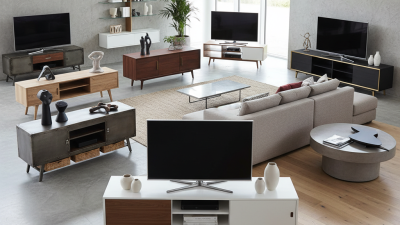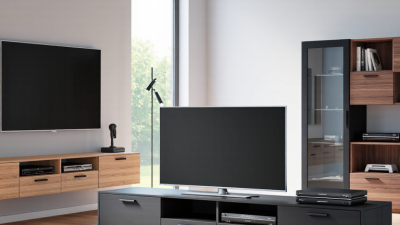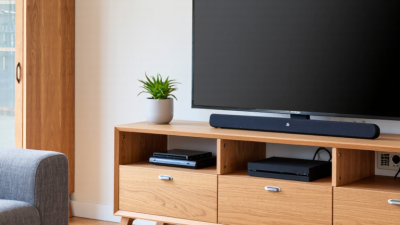
A television often becomes the visual center of a living room, but the furniture beneath it affects more than appearance. The right Tv Table can keep a screen stable, organize everyday devices, and make a room feel less cluttered. The wrong size may block a walkway or leave cables hanging behind the console. Measure twice.
This guide looks at practical ways to choose a Tv Table that suits your space and viewing habits. Begin with the room’s available width and depth, then compare them with the table’s dimensions. Check the screen manufacturer’s guidance for stand placement, and confirm the furniture’s stated weight capacity before buying. A broad, steady base matters, especially in busy homes. Small details matter.
Storage needs vary. A household with a streaming box, game console, and soundbar may need open shelves, while a simple setup may work better with closed cabinets. Look for cable openings and enough clearance around devices so wires do not bend sharply and equipment has room to ventilate. Materials, finish, and edge design also affect how the table fits your decor and daily routine. Nothing fits everyone. Even careful planning can miss a detail, such as a door that swings into the unit or a plug hidden behind it. Use this guide to weigh those trade-offs and choose a Tv Table that feels functional, stable, and right for your home.
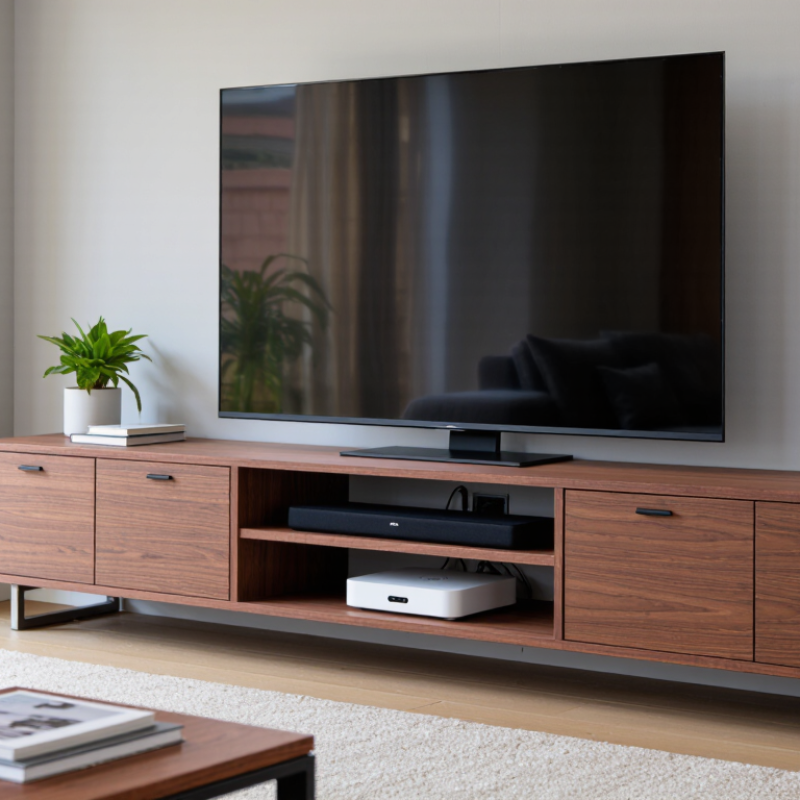
How you watch TV should guide the table you choose. Nielsen’s May 2024 The Gauge report found that streaming made up 38.8% of U.S. television use. If streaming is your main habit, leave room for a streaming device and keep cables accessible. For gaming, check that consoles fit with space around them for airflow. Measure your television’s feet and the wall or floor area before shopping. Measure twice.
Storage needs can be easy to underestimate. List the equipment you actually use: a soundbar, game controllers, remotes, or a small collection of discs. Open shelves make devices easy to reach, while closed cabinets hide clutter. But closed spaces can trap heat, so look for ventilation openings. A table that fits everything today may feel cramped after one new device; that’s worth considering.
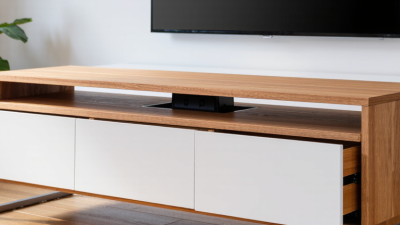
Measure the room before choosing a TV table. Record the wall width, floor-to-screen height, and distance from the sofa to the screen. Include baseboards, door swings, vents, and nearby outlets; a table that fits on paper may block a walkway in practice. Leave space around the television for cables and airflow, and check the table’s depth against the TV’s feet. Small details matter.
Placement should suit the viewing distance, not just the empty wall. SMPTE’s professional viewing guidance uses a 30-degree horizontal viewing angle as a useful minimum. For a 55-inch, 16:9 screen, that means sitting roughly 7.5 feet away; larger screens generally need more distance. Measure from your usual seated position, not the back wall. A tape measure helps. So does masking tape marking the table’s proposed footprint. I once underestimated a radiator’s reach; the layout looked fine until the room warmed up. Recheck the route from the doorway, and make sure drawers or cabinet doors can open without striking furniture. A few minutes of measuring can prevent a bulky table from making a compact room feel tighter.
| Measurement or Check | How to Measure | Practical Guideline | Example |
|---|---|---|---|
| Available wall width | Measure the usable width of the wall where the TV table will sit. Exclude doorways, radiators, and other obstacles. | Choose a table narrower than the usable wall area, leaving enough space at both ends for a balanced layout and access. | For a usable wall width of 240 cm, a table around 180–210 cm wide may leave room on either side. |
| Floor space and walkways | Measure from the wall to the nearest furniture or walking route, and mark the table’s intended depth on the floor. | Keep circulation paths clear. A walkway of about 75–90 cm is commonly comfortable where space allows. | If the wall-to-walkway distance is 100 cm, a table 35 cm deep leaves about 65 cm of clearance; consider a shallower table or a different placement. |
| TV width and support | Measure the TV’s actual width, not just its advertised diagonal screen size. Check the position and spacing of its feet or stand. | The table should provide a stable surface with enough depth and width to support the TV base. Follow the TV manufacturer’s support requirements. | A TV measuring 122 cm wide could sit on a 140 cm-wide table, provided its stand fits securely and the table’s load limit is sufficient. |
| Viewing distance | Measure from the usual seated eye position to the screen location. | Use the distance to assess screen size and seating layout. A commonly used starting range for a 4K TV is roughly 1–1.5 times the screen’s diagonal, but personal comfort and content matter. | For a 65-inch screen (about 165 cm diagonally), a starting viewing range is approximately 165–248 cm. |
| Screen and seated eye height | Measure the height of seated eye level and compare it with the center of the screen in its planned position. | For relaxed viewing, aim to have the screen center near seated eye level, or slightly below it. Adjust for seating height and viewing habits. | If seated eye level is 105 cm from the floor, position the screen center close to that height where practical. |
| Sockets and cable access | Locate power outlets, aerial or network points, and any cable routes behind or beside the planned table. | Allow access to connections and avoid pinching cables against the wall. Keep cables organized and away from heat sources and walkways. | If outlets are 20 cm above the floor, check that the table’s back panel or storage compartments will not block them. |
| Doors, windows, and heat sources | Check door swing, window access, curtains, radiators, fireplaces, and vents around the placement area. | Do not obstruct doors, ventilation, or heat sources. Leave the clearances specified for the TV and other equipment. | If a radiator sits beneath the proposed location, choose another position or confirm that the equipment can be kept safely away from direct heat. |
| Equipment and storage needs | List devices to be stored, then measure their width, depth, and height, including space for plugs and ventilation. | Select shelves or compartments that fit the equipment while allowing airflow and easy access to controls. | A device 36 cm wide and 28 cm deep needs a compartment larger than those measurements, with additional room for cables and ventilation. |
| Wall and floor conditions | Check whether the floor is level and whether the table will stand against a skirting board or uneven wall. | Use adjustable feet or suitable leveling supports if needed. If securing the TV or table to a wall, use fixings appropriate for the wall type. | A thick skirting board may leave a gap behind a flat-backed table; measure the gap before choosing the table depth and design. |
A TV table should support the screen’s full width, not just its central stand. For a standard 16:9 television, screen width is about 87% of its diagonal. That makes a 55-inch screen roughly 48 inches wide, based on the aspect ratio used for HDTV and UHD displays. Allow a few inches of extra table space on each side, especially if the TV has wide-set feet. Measure the feet, too; some stands need more depth than expected.
Height affects comfort. The screen’s center should sit close to seated eye level, so you can watch without tilting your head up. OSHA’s workstation guidance places the top of a computer display at or below eye level; a living-room TV is different, but the principle is useful. SMPTE’s viewing-environment guidance uses a 30-degree horizontal viewing angle as a reference for HDTV. Room layout and viewing distance still matter. The rule is not perfect for every sofa or posture.
Tips: Measure from the floor to your eyes while seated. Then compare that figure with the table height and half the TV’s height. Check the assembled setup before buying; a thick screen bezel or raised feet can shift the center. Leave space for cables, too. Small detail, big difference.
Start with the load, not the finish. A television, soundbar, and console can concentrate weight on a narrow surface. Measure their combined weight, then check the table’s capacity and usable depth. Measure again.
Solid wood can resist flexing, but joint quality and moisture matter. Steel frames often feel rigid, while thin panels may still wobble. Glass looks light, yet needs careful edge protection and frequent dusting. Engineered wood is often affordable, though swollen edges can be difficult to repair.
Stability deserves more attention than appearance. The U.S. Consumer Product Safety Commission’s 2000–2018 tip-over report recorded
459 deaths involving TVs, furniture, or appliances.
Children were the majority of victims. Choose a broad base, a low center of gravity, and a rear panel that permits secure wall anchoring. ANSI/BIFMA X5.9 evaluates storage-unit strength and durability; treat it as a useful benchmark, not a guarantee for every TV table. Check shelf load limits.
Open shelves allow airflow around devices, but collect dust and leave cables visible. Closed cabinets hide clutter, yet cramped compartments can trap heat.
One easily missed detail: a table may fit the wall but block a power outlet or cable connection.
Set a spending limit before browsing, but budget for more than the table’s listed price. Include delivery, taxes, and any tools or storage bins you may need. Leave a little room. A tape measure helps prevent costly mismatches: check the table’s width against your TV’s stand, and measure the space around nearby doors and walkways. A wider top can look reassuring, but it may crowd a small room. I’ve found that measuring twice is less tedious than rearranging furniture after delivery.
Assembly can affect both the final cost and your choice. Read the product details for estimated assembly time, required tools, and the number of people recommended. A basic screwdriver may be enough, but some designs require a second person to hold panels steady. Check whether the instructions and hardware are included, and look for clear diagrams before buying. If you have limited space, consider where the pieces can be laid out during assembly. Small costs add up. Even a careful estimate can miss a tool or delivery fee, so compare the full amount, not just the shelf price. During assembly, stop if holes do not line up; forcing a screw can damage the frame. A wobbly table isn’t a bargain.